Gaussian Splats are becoming an increasingly useful part of spatial computing. With RealityKit now supporting Gaussian Splats, we have been exploring how to make them easier to create, optimise and use within STAGEit.
We recently added support for animated Splat sequences in STAGEit, allowing a sequence of Gaussian Splats to be played back as moving 3D content. Getting them to play was one part of the problem. Actually creating animated Splats was another.
Making animated Splats more accessible
There are already some impressive specialist tools and services for creating animated Gaussian Splats, but the process can still feel like a bit of a dark art.
We wanted to find out how much of that process we could bring onto an ordinary Mac, using video and images from a phone as the input.
So we have started building animated Gaussian Splat creation into STAGEit Optimiser.
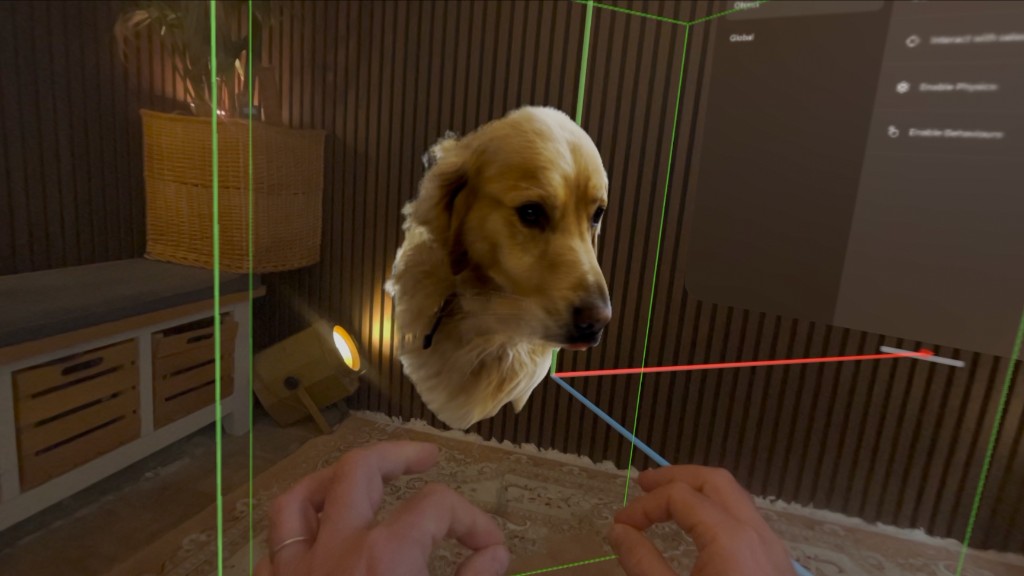
One of our first tests was Merlin.
We captured him on a phone, processed the footage locally on a Mac and turned it into an animated Gaussian Splat.
From phone footage to spatial content
The results are still rough around the edges, but the important part is that the pipeline works.
Our aim is to take something that currently requires specialist knowledge and turn it into a much more straightforward workflow. Capture some footage, process it locally on your Mac, then bring the resulting animated Splat into STAGEit.
That local workflow is important to us. Rather than relying entirely on an external processing service, we want creators to be able to experiment with their own captures and produce spatial content using the hardware they already have.
There is plenty more work to do on the processing and output quality, but these first tests have been really encouraging.
We will be bringing an alpha version of the animated Splat workflow into STAGEit Optimiser soon, so people can start experimenting with it themselves.